As an EU citizen you can make your voice heard and demand a faster transition to animal-free methods! Sign the petition now →
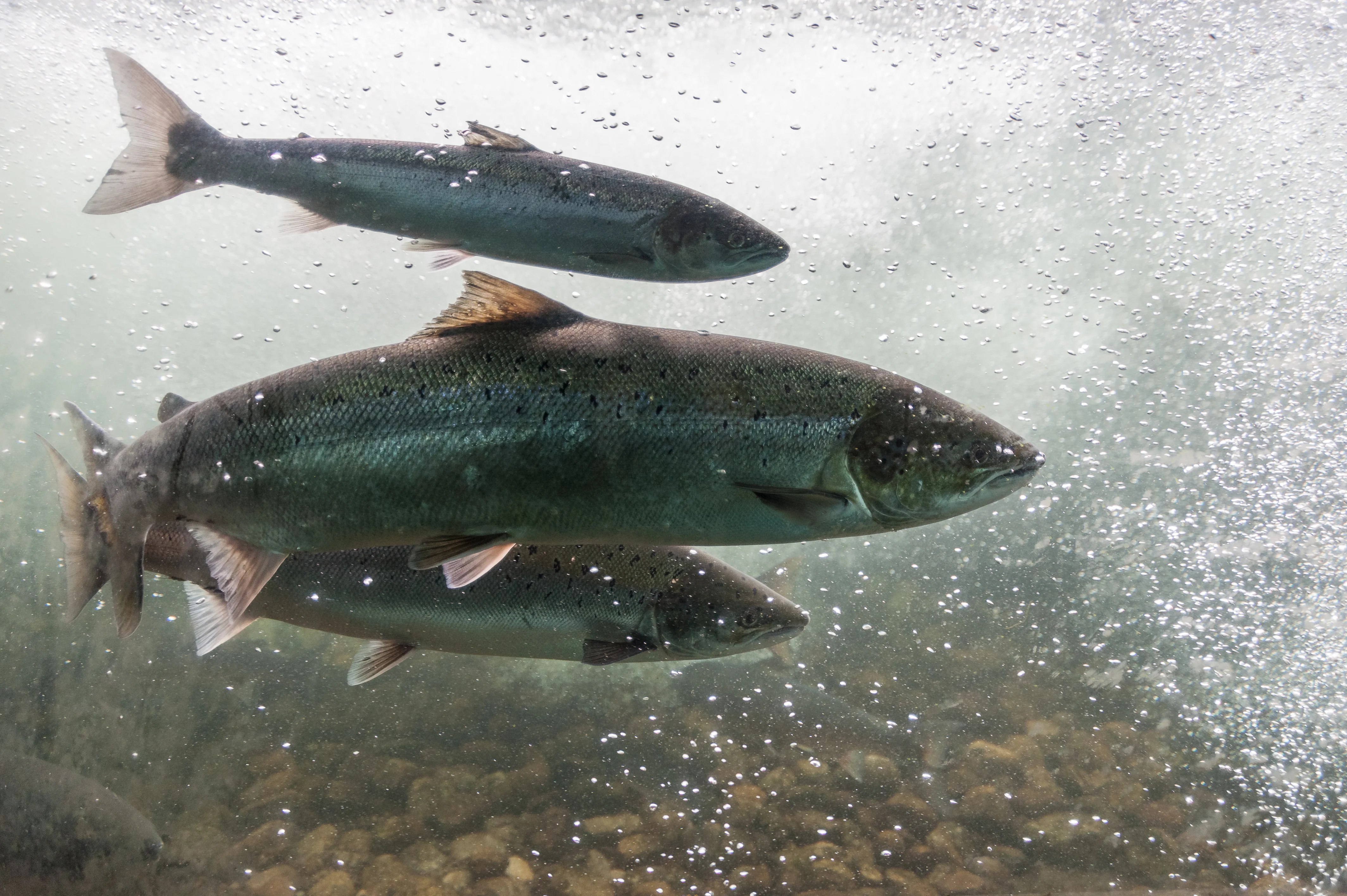
New report: Stop investments in fish farming factories
In a new report, Project 1882 outlines necessary priorities for strengthened fish welfare and for achieving a truly sustainable aquaculture.
There is significant political interest in promoting aquaculture, including fish farming. Efforts are being made to reduce the regulatory burden and increase production, but animal welfare is not given the same priority. In a new report, Project 1882 highlights the issue, proposes solutions, and calls for change.
"Sweden is one of the countries where salmon consumption is highest, but not many are aware of the dark side of fish factory farms. Right now, there is an alarming trend in which investments are being made and new, enormous land-based so-called RAS salmon farms are being established. They are presented as sustainable, but the animals’ needs and suffering are ignored, and animal welfare legislation is falling further behind", says Linda Björklund, Animal Welfare Specialist at Project 1882 and author of the report.
What are RAS salmon farms?
RAS stands for recirculating aquaculture systems and refers to land-based fish farms that use purified, recirculating water in closed systems. The system is often touted as a more sustainable alternative to traditional fish farming, but there are major shortcomings in animal welfare, which is a key component of sustainability.
Fish farms contribute to overfished oceans
A fundamental problem in the farming of predatory fish, such as salmon, is that these fish depend on feed that consists, at least in part, of fish. This means that fish farms, just like the fishing industry, contribute to the depletion of our oceans.
"It is time for our politicians and authorities to start taking the issue of fish welfare seriously and to ask themselves whether they want to contribute to, or stop, more animal factory farms and overfished oceans", says Linda Björklund.
Project 1882's demands for more sustainable aquaculture
Project 1882 states that the following measures are necessary:
- Species-specific animal welfare legislation for fish and other aquatic animals, in Sweden and at the EU level:
- Legislation on animal welfare at slaughter, including a ban on carbon dioxide stunning
- Legislation on animal welfare in transport
- Legislation on the farming of aquatic animals, covering the entire life of the animals
- A ban on the rearing of predatory fish such as salmon
- A ban on the rearing of cephalopods
- An end to financial support for and the establishment of RAS factories
- Consideration of animal welfare in all visions, strategies and action plans relating to aquaculture and fisheries
- A strategy for transitioning to a sustainable food system with a focus on plant-based options
Project 1882 is organising a webinar on 4 June 2026, to raise awareness and encourage engagement on the need for improved fish welfare, both nationally in Sweden and at the EU level. Find out more and sign up here.
Stay informed!
The animals need you now more than ever. Stay ahead with urgent updates you won’t want to miss and exclusive tips on how to make a real difference – straight from Project 1882. Sign up for our monthly newsletter today!
