

Avian flu hits record levels – Europe’s worst year yet
Avian influenza reached historically high levels across Europe in 2025. According to Project 1882, the trend highlights how factory farms contribute to the spread of disease and cause immense suffering for the animals.
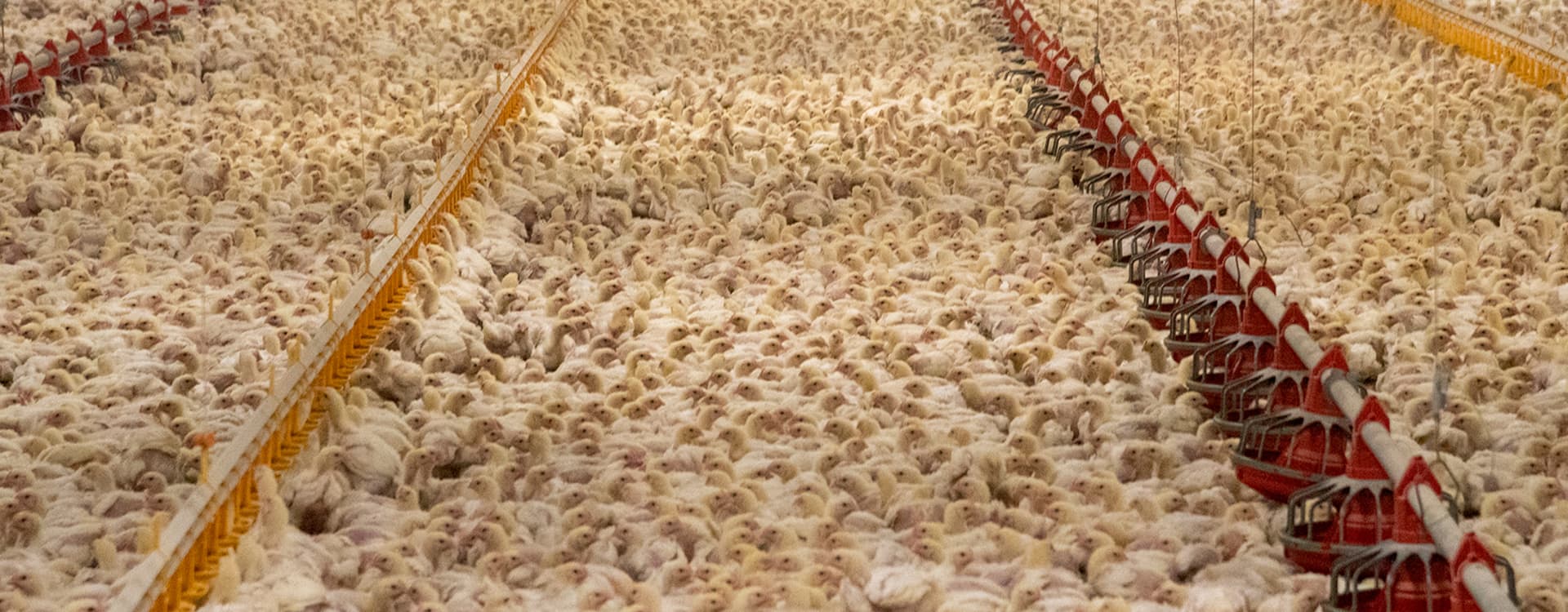
Over 700 outbreaks of highly pathogenic avian influenza were reported across Europe in 2025, making it one of the worst years on record. The outbreaks largely affect large-scale factory farms where thousands of birds are kept in close confinement. In these environments, viruses can easily take hold and mutate, thereby increasing the risk of new pandemics.
– The fact that avian flu breaks records year after year is clear evidence that factory farms must be dismantled – for the sake of the animals, but also for human health and our planet. Factory farms are hotspots for disease, and as long as animals are kept in extremely crowded and stressful conditions, infectious diseases will continue to spread, says Benny Andersson, CEO of Project 1882.
According to the European Commission’s Animal Disease Information System (ADIS), the highest number of outbreaks have been reported in Germany, Poland, and Hungary, but avian influenza is also a widespread problem in Sweden, with several large outbreaks recorded in 2025. When an infection is detected, it often leads to the mass culling of all birds, whether they are sick or not. Avian influenza also affects wild birds, meaning the virus constantly risks being reintroduced into factory farms.
– To reduce animal suffering and the risk of future outbreaks, policymakers need to move away from factory farming and invest in plant-based food production. The best action consumers can take to help animals is to choose plant-based options, concludes Benny Andersson.
Help us save lives!
Project 1882 strives for a world where every life matters. By supporting our work, you help make our vision become a reality.