-
Ingelsta kalkon. Website visited 2025-09-10 Djuromsorg - Ingelsta Kalkon
-
Wallman, M. (2010). Livscykelanalys (LCA) av svensk kalkonproduktion. Website visited 2025-12-18 https://urn.kb.se/resolve?urn=urn:nbn:se:ri:diva-537
-
Velleman, S., Anderson, J., Coy, C., & Nestor, K. (2003). Effect of selection for growth rate on muscle damage during turkey breast muscle development. Poultry Science, 82(7), 1069–1074.
-
Crespo, R., & Shivaprasad, H.L. (2013). Developmental, metabolic, and other noninfectious disorders. Diseases of Poultry, 13th Edition, 1242-1243.
-
Huff, G., Huff, W., Rath, N., Balog, J., Anthony, N.B., & Nestor, K. (2006). Stress-induced colibacillosis and turkey osteomyelitis complex in turkeys selected for increased body weight. Poultry Science 85:266-72.
-
Hafez, H. M., & Shehata, A. A. (2021). Turkey production and health: current challenges. German Journal of Veterinary Research, 1(1), 3–14.
-
Asaduzzaman, M., Salma, U., Ali, H.S., Hamid, M.A., & Miah, A.G. (2017). Problems and prospects of turkey (Meleagris gallopavo) production in Bangladesh. Res. Agric. Livest., Fish., 4 (2): 77-90.
-
Asaduzzaman, M., Miah, A. G., Salma, U., & Jahan, M. S. (2022). Efficiency of natural mating and artificial insemination in turkey (Meleagris gallopavo) breeding. Asian-Australasian Journal of Bioscience and Biotechnology, 7(1), 1–12.
-
Juliet, A. L., & Bakst, M. R. (2008). The current state of semen storage and AI technology. Biotechnology and Germplasm Laboratory, Beltsville Agricultural Research Center. Agricultural Research Service, USDA, Beltsville, MD, USA.
-
Cathey, J., Melton, K., Dreibelbis, J., Cavney, B., Locke, S., DeMaso, S., Schwertner, W.T., & Collier, B. (2007). Rio Grande wild turkey in Texas: biology and management. Texas Farmer Collection.
-
Stratmann, A., & Ringgenberg, N. (2022). Use of different elevated structures by commercial fattening turkeys in Switzerland. Journal of Applied Poultry Research, 32, 100304.
-
Abdel-rahman, M. A. (2005). Study on the effect of stocking density and floor space allowance on behaviour, health and productivity of turkey broilers. Assiut. Vet. Med. J. 51(104):1-13.
-
Glatz, P., & Rodda, B. (2013). Turkey farming: Welfare and husbandry issues. African Journal of Agricultural Research 8(48): 6149–6163.
-
Jhetam, S., Buchynski, K., Shynkaruk, T., & Schwean-Lardner, K. (2022). Evaluating the effects of stocking density on the behavior, health, and welfare of Turkey hens to 11 weeks of age. Poult. Sci. 101, 101956
-
Clark, S., Hansen, G., McLean, P., Bond, P., Wakeman, W., Meadows, R., & Buda, S. (2002). Pododermatitis in Turkeys. Avian Diseases, 46(4), 1038–1044.
-
Swedish Board of Agriculture (2025). Animalieproduktion. Annual and monthly statistics – 2025:06.
-
EFSA (2004) Welfare aspects of the main systems of stunning and killing the main commercial species of animals. The EFSA Journal 45: 1–29.
Turkeys
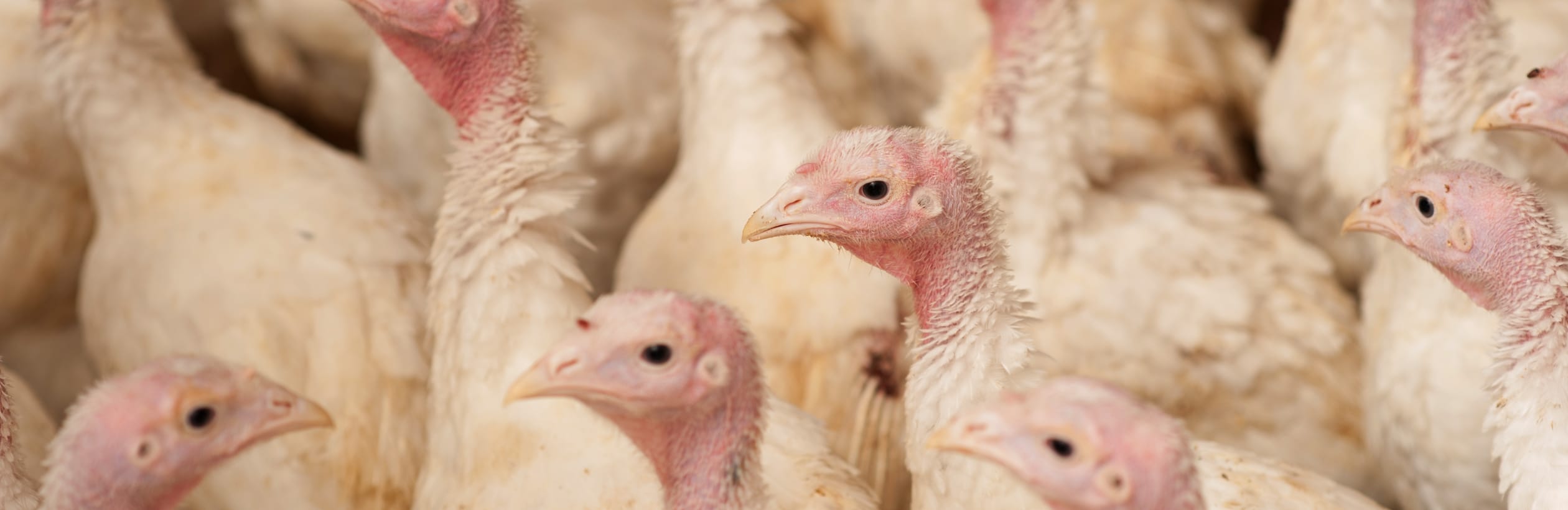
In factory farms, turkeys are often stressed and dirty, and the stables are so crowded that they cannot avoid stepping on other turkeys trying to rest. Turkeys have been bred to grow rapidly, become heavy, and develop large breast muscles, which leads to pain, mobility issues, and sudden death. It doesn’t have to be this way. Project 1882 is working actively to ensure better conditions for turkeys and to reduce the killing.
This is what Project 1882 is doing for the turkeys:
- Putting pressure on politicians and authorities to change the laws that affect turkeys, both in Sweden and at the EU level.
- Influencing companies to adopt policies on reduced meat consumption and stronger animal welfare requirements than those required by law.
- Running the inspirational website Välj Vego (Choose Veg), which aims to make it easier for more people to choose not to eat meat from turkeys and other animals.
On this page
The three biggest issues

Breeding
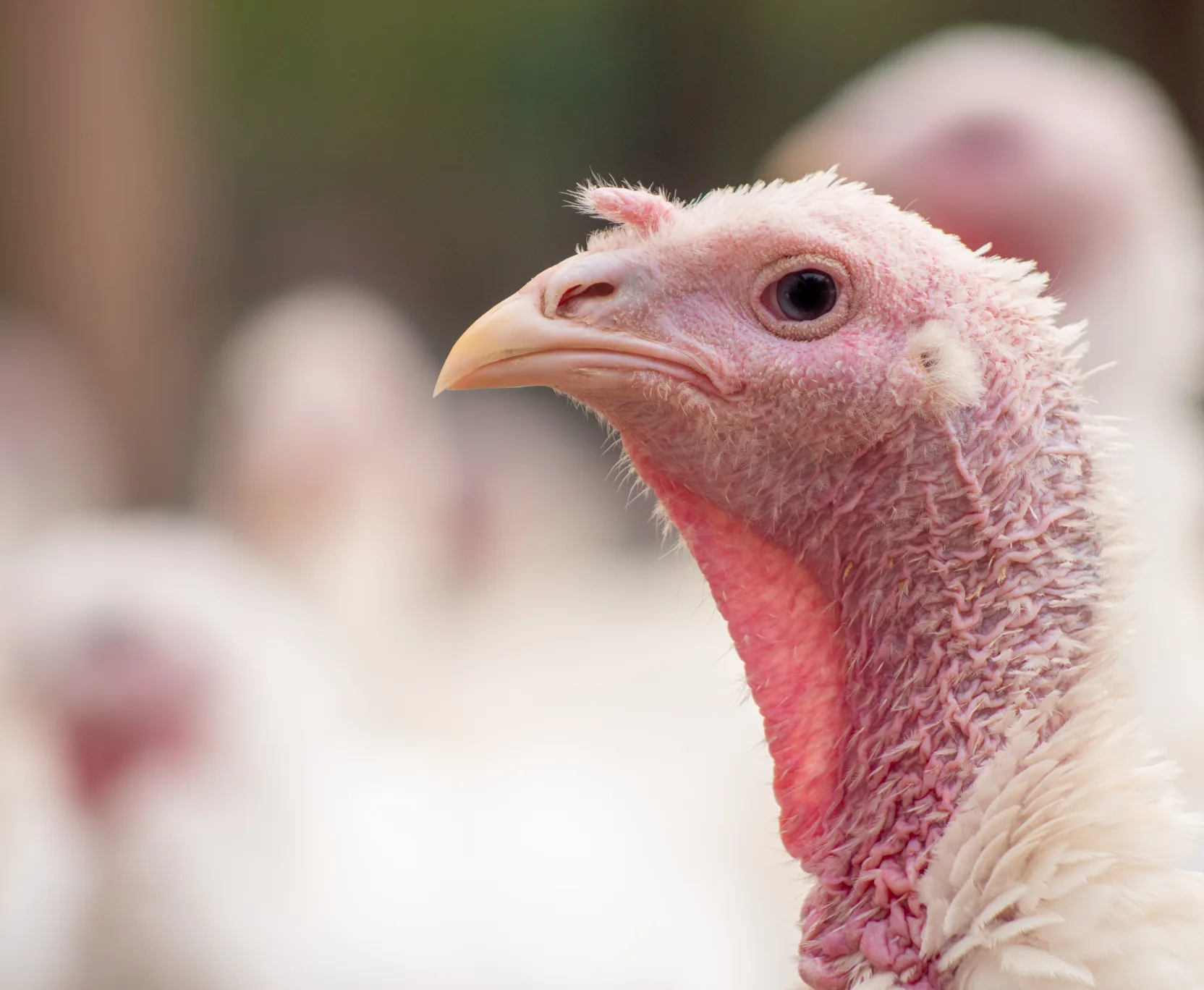
Turkeys have been bred to be heavy and have large breast muscles, which has led to difficulties in performing natural behaviors. They have also been bred to grow so quickly that they suffer from muscle damage, deformed legs, and can die suddenly.
Overcrowding
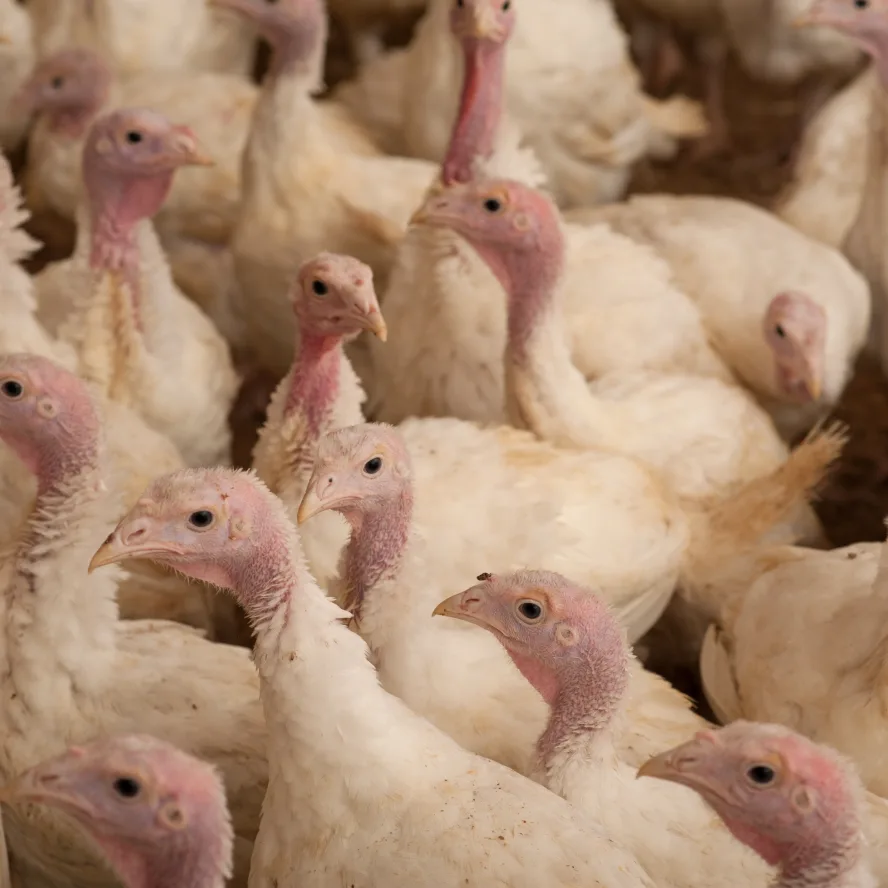
Turkeys are raised in large stables where several thousand individuals are crowded together on concrete floors with only litter, water, and feed troughs. Turkeys kept in crowded conditions are stressed and may start cannibalizing each other, and they often have painful lesions and injuries on their feet.

Slaughter
Turkeys are stunned in an electric water bath before their throats are slit, and they bleed to death. To be stunned, they are hung upside down and shackled by their legs, then their heads are lowered into an electric water bath. It is a painful and stressful procedure that risks failure, leading to more pain and stress.
Issues with turkey factory farms
450,000 turkeys were killed in Sweden in 2024. In factory farms, turkeys are often stressed and dirty, and the stables are so crowded that they cannot avoid stepping on other turkeys trying to rest. Turkeys have been bred to grow quickly, become heavy, and develop large breast muscles, which leads to pain, difficulty walking, and sudden death.
Breeding
Turkeys have been bred to grow quickly, become heavy, and develop large breast muscles. Turkey chicks weigh about 60 grams at hatching, and in 20 weeks, a turkey has grown 300 times its own weight and weighs about 18 kilograms at slaughter1,2. This breeding has led to an increased risk of muscle damage 3 and broken bones 4, as well as increased susceptibility to disease 5. It has also led to an increased risk of deformed legs, which in turn can lead to lameness and, in the worst cases, death 6. The sudden death of turkeys is also linked to the extreme breeding practices carried out in factory farms 6.
Today's breeding practices are one of the main reasons why male turkeys have become so large and heavy that they have difficulty mating naturally 7, 8. Raising turkeys in factory farms is therefore completely dependent on artificial insemination9. Another natural behavior for turkeys is to rest high up10, but extreme breeding for rapid growth and larger breast muscles has affected turkeys' mobility and made them front-heavy11. This has led to difficulties in using various perches and platforms. However, turkey factories do not offer perches or platforms, making it impossible for turkeys to satisfy their need to roost high up.
Overcrowding
Turkeys are raised in large stables where several thousand individuals are crowded together on concrete floors with only litter, water, and feed troughs. Turkeys that are crowded together are stressed12 and may start to cannibalize on each other13. They often lie for long periods on litter that is wet with faeces and have dirtier and sparser plumage compared to turkeys that have more space14. Overcrowding increases the risk of painful sores and injuries to the feet14, which can lead to lameness and disease15. They also find it difficult to rest undisturbed, as it is so crowded that other turkeys sometimes have no choice but to walk too close or step on those trying to rest14.
Slaughter
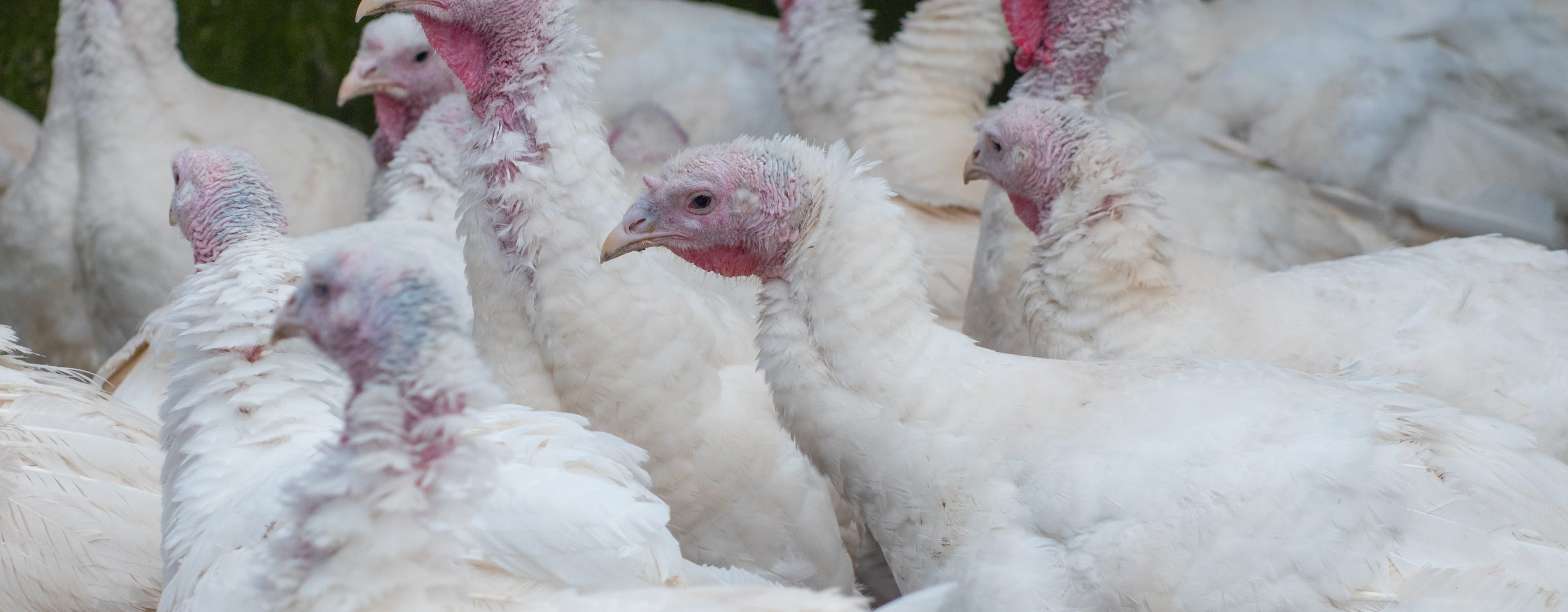
450,000 turkeys were killed for meat in Sweden in 202416, of which over 13,000 were deemed inedible and were “discarded”17. At the slaughterhouse, turkeys are often stunned with electricity2,3. Turkeys are hung upside down and secured by their legs. The birds' heads are then lowered into an electric water bath to stun them with an electric shock18. There is a risk that stunning in an electric water bath will fail, which means that the turkeys may be conscious before their throats are cut and they bleed to death17.
It is very stressful and painful for the turkeys to be hung upside down and shackled by their legs, especially for those who already have leg pain17. The pain and stress often cause the birds to flap their wings while hanging upside down, which can cause injuries and fractures17. Turkeys also have long wings, which means they can suffer painful shocks to their wings before their heads reach the electrified water17.
Support our work for turkeys!
Project 1882 works for the animals that are the most exploited and suffer the worst. Thanks to your support, we can change the situation of turkeys in factory farms.