

New data shows five years of systematic animal abuse in the Swedish chicken industry
Since 2021, Project 1882 has requested statistics and inspection reports on chicken slaughter in Sweden. Every year has revealed systematic failings that have not been rectified. These failings have caused unnecessary suffering to tens of thousands of chickens every year. Project 1882 believes that the problems lie in the use of turbo chickens and high slaughter rates, as well as the government’s historically passive stance.
In 2025, over 49,000 chickens were subjected to treatments that led to pain, stress or premature death prior to slaughter – something the Swedish Food Agency has flagged as potentially contravening the Animal Welfare Act. Project 1882 has been requesting statistics and inspection reports from the agency's animal welfare inspections at chicken slaughterhouses since 2021. The shortcomings that have been uncovered show that the current system does not provide the chickens with the protection required by law and does not result in any penalties for chicken factory farmers.
‘Project 1882’s investigation shows that Swedish chicken factory farms constitute an ongoing animal welfare disaster. The problems are serious, systematic, and affect many individual birds. We demand action from the incoming government.’
− Benny Andersson, CEO of Project 1882
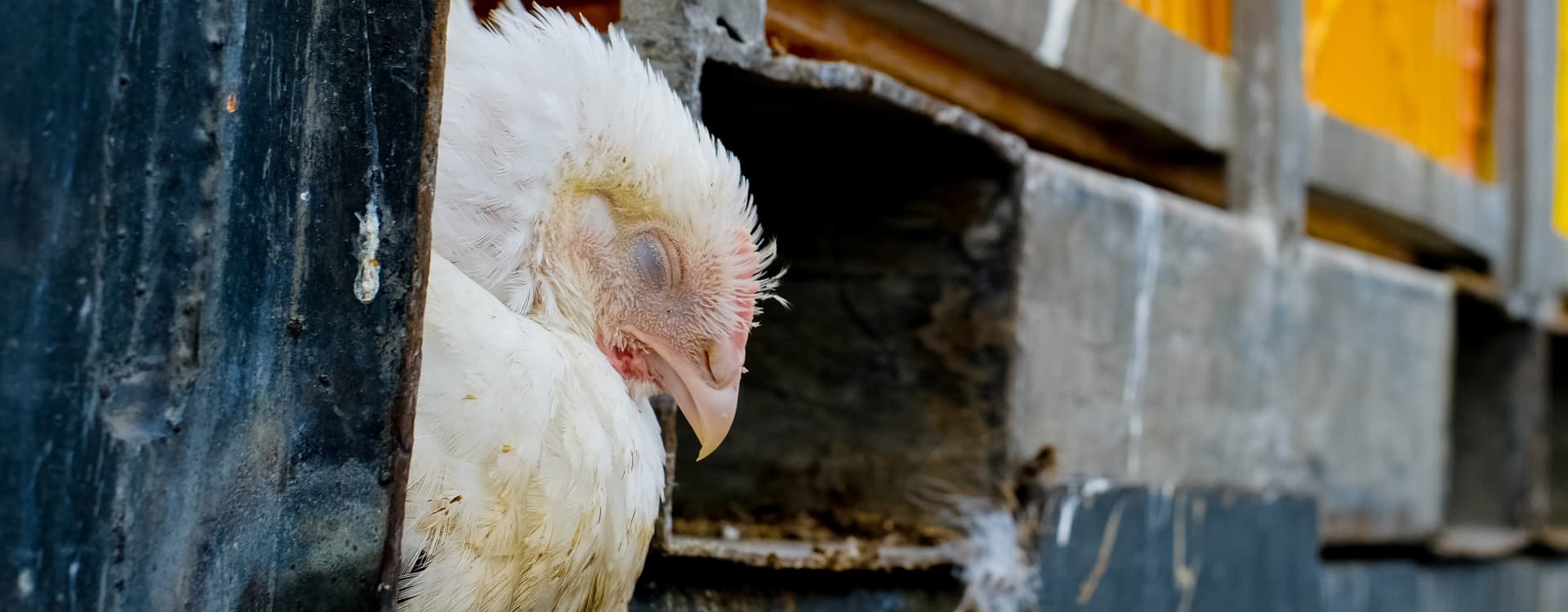
The investigation into shortcomings in chicken factory farms covers issues detected at all Swedish chicken slaughterhouses, including those owned by international companies such as Scandi Standard and Atria. The detected issues primarily concern rearing and transport. This suggests that chickens have been transported illegally whilst in pain or suffering from illness. Few shortcomings are detected at the slaughter stage itself, but they are serious as they may mean that chickens are cut open without anaesthesia or scalded alive.
More problems for turbo chickens
The risks of fast-growing chickens suffering from burns under their feet and dying during transport are higher than for healthier breeds. Around 99 per cent of the chickens reared in Swedish chicken factory farms are turbo chickens – even though both consumers and businesses are calling for change.
‘The rapid growth of turbo chickens creates an extreme situation where the Animal Welfare Act is not being complied with at all. Minister for Rural Affairs Kullgren has failed in his duty during his term of office. The new minister must demand that chicken factory farms comply with the jointly agreed legislation; we need a Minister for Animal Welfare.’
– Benny Andersson
During the previous term of office, the Minister for Rural Affairs was responsible for both promoting animal welfare in Sweden and ensuring the profitability of factory farms – two areas that are in conflict. Project 1882 believes that a Minister for Animal Welfare would have had clearer responsibilities and would have been better placed to resolve systemic problems. Denmark has recently appointed a Minister for Animal Welfare, and he has signalled that a ban on turbo chickens is on the way.
Statistics for 2025
The Swedish Food Agency is the authority responsible for official animal welfare inspections of live animals before, during and after slaughter at abattoirs. This is what the statistics from their inspections in 2025 revealed:
- At least 39,850 chickens were exposed to inappropriate temperatures.
- At least 30,000 chickens had an unacceptable number of foot injuries, such as burns under their feet.
- 5,108 chickens were subjected to overcrowding, i.e. unacceptable crowding in transport crates.
- At least 3,850 chickens have died in transit, including seven occasions where the mortality rate during transport exceeded 1 per cent. Chickens that died in transit on other occasions are not included in this figure, as this is regarded as ‘normal’ mortality for turbo chickens in Sweden.
- 81 chickens have been trapped in the transport crate and died as a result.
- 66 chickens have arrived at the abattoir with injured wings.
- 55 chickens have had deep lacerations.
- There have been 33 instances of slaughtering deficiencies, which may have posed a risk of chickens being cut open without stunning or scalded alive.
The Swedish Food Agency reports inadequate temperatures during transport as the most common deficiency in terms of the number of individuals affected. However, they have not estimated how many chickens have suffered foot injuries. Such reports indicate that all 100 chickens examined per flock had noticeable burns, or that a high proportion of them had severe burns under their feet. As each flock often consists of around 30,000 birds, Project 1882 estimates that foot injuries are in fact the most common deficiency in terms of the number of birds affected.
Read more
You can read more about what these animal welfare issues mean for the chickens and what political solutions are needed in Project 1882’s 2025 report here.
You can stop the suffering
110 000 have already spoken out and demanded a ban on turbo chickens. You can still make your voice heard!