

33 reports of animal welfare violations – yet not a single inspection was conducted
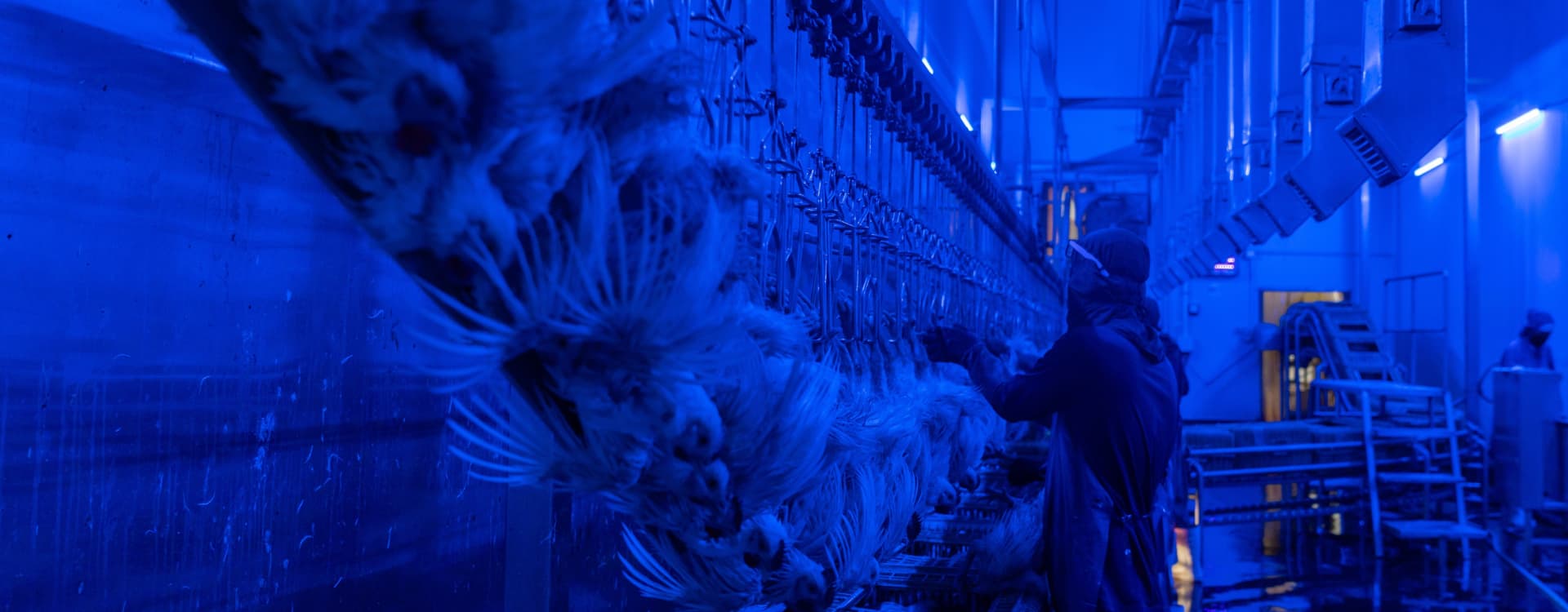
Every year, Project 1882 requests inspection reports on animal welfare. In 2025, no inspection was carried out at a major chicken slaughterhouse, despite official vets having identified shortcomings. Project 1882 can reveal that the situation has been similar for several years running, and that the responsible authority lacks transparency regarding how Swedish chickens are treated at the time of their death.
Project 1882 has requested all inspection reports from county administrative boards relating to the four largest chicken slaughterhouses (Kronfågel Scandi Standard, Guldfågeln, Torsåsens Fågelprodukter and Atria) since 2021 and can now reveal that no physical inspections took place in 2025.
The county administrative boards are responsible for monitoring animal welfare, but no one has visited Guldfågeln’s or Atria’s slaughterhouse for at least five years. This lack of insight has been going on for many years. Responsibility is more often placed on individual farmers or transporters than on the large companies that purchase and slaughter the animals.
“More than 110 million chickens are killed by these companies every year. Yet not a single animal welfare inspector has been there, despite shortcomings reported by vets on site. That is completely unacceptable. Slaughterhouses handle living, sentient animals. They must be inspected.”
– Benny Andersson, CEO of Project 1882
Five inspections in five years – and none in 2025
- 2025: 0 inspections
- 2024: 1 inspection (Kronfågel)
- 2023: 1 inspection (Torsåsens Fågelprodukter)
- 2022: 1 inspection (Kronfågel)
- 2021: 2 inspections (Kronfågel)
No supervision is taking place despite reports
This lack of oversight in 2025 occurred even though the Swedish Food Agency’s official veterinarians at the abattoirs had reported animal welfare shortcomings relating to slaughter to the county administrative boards on 33 occasions. In 2021, one County Administrative Board received 113 reports from the Swedish Food Agency, which resulted in two on-site inspections. The Swedish Food Agency’s reports on chickens often concern thousands of animals and serious shortcomings such as prolonged suffering, scalding whilst still alive and deaths during transport.
Some complaints and reports from the Swedish Food Agency are dealt with administratively from offices, via telephone calls or email. However, cases involving trapped turbo chickens that have suffered all the way to the abattoir are so common that they are rarely dealt with by the county administrative boards – neither through on-site inspections nor administrative checks.
In other cases, companies are given time to explain why things have gone "wrong”, which is often accepted by the authorities.
“Year after year, the same problem remains: the animals who are most numerous and suffer the most are not getting the protection they need. This is a failure of political leadership. Sweden needs a Minister for Animal Welfare with clear responsibility and accountability for animals.”
– Benny Andersson
Clear problems are investigated further
In 2026, the government of the time commissioned an inquiry into how animal welfare inspections could be improved, but Project 1882 argues that the shortcomings are acute and that politicians should have acted sooner.
“An ongoing inquiry cannot become an excuse for inaction. Chickens are suffering here and now. The major chicken producers must be held accountable for what happens in their operations every single day.”
– Benny Andersson
About animal welfare inspections in Sweden
The county administrative boards are responsible for animal welfare inspections in Sweden, and it is they who can demand improvements and report individuals or companies if the Animal Welfare Act is not being complied with. At the larger abattoirs, there are official veterinarians from the Swedish Food Agency. They send information to the county administrative boards in the event of animal welfare shortcomings so that the county administrative boards can act. Inspection reports are public information and can be requested by the public.
What needs to change?
-
There is a need for a ban on turbo chickens. Along with the ban, the new government must take full responsibility for the welfare of these chickens. For example, overcrowding at the facilities needs to be addressed, and electrical water bath stunning must be banned.
-
The investigation shows that the county administrative boards are failing the chickens and that more animal welfare inspections are needed. The new government needs to allocate more resources to animal welfare inspections and ensure that the authorities have the resources they need.
Make a difference
110,000 people have already spoken out and demanded that the government ban turbo chickens. You can still make your voice heard!