

New footage reveals breeding of monster foxes in Finland
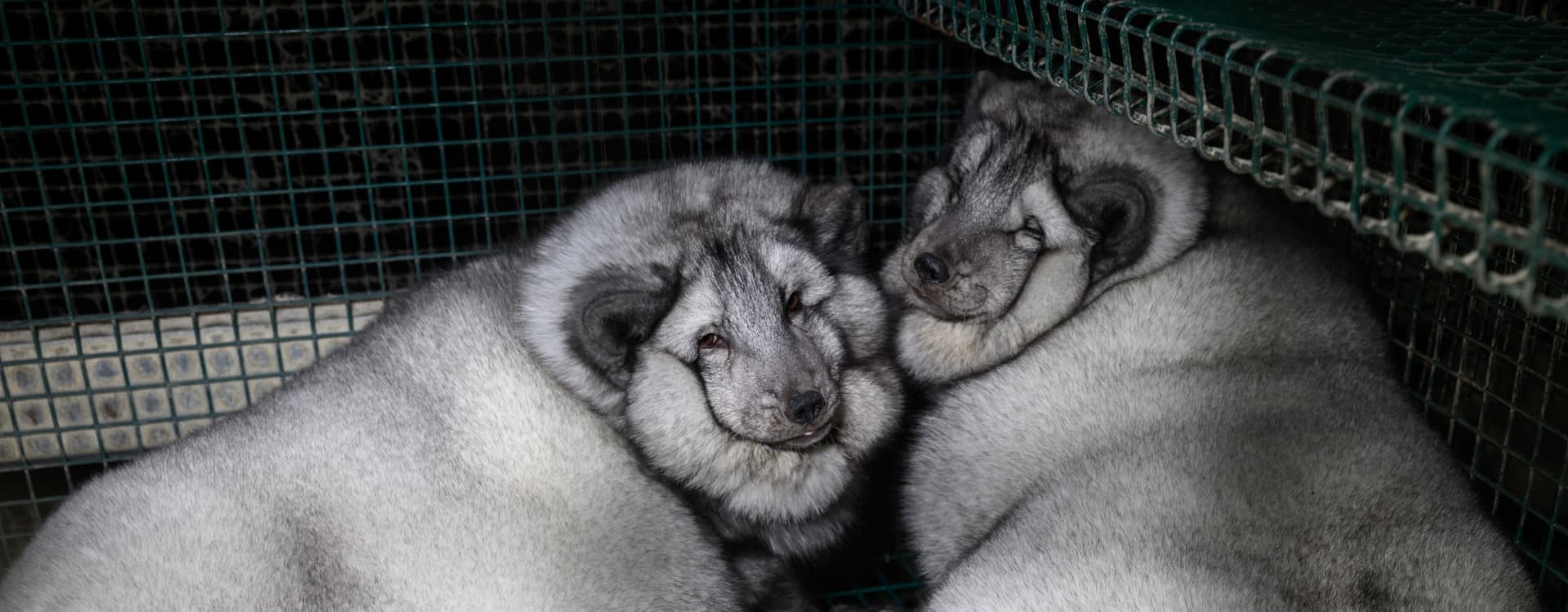
Project 1882's new photos and videos from Finnish fur farms show that monster foxes are still being bred in the fur industry. The material is being released as the European Commission considers the future of fur farming in the EU.
Newly obtained material from fur farms in Finland shows foxes with extreme skin folds, severe eye infections, untreated injuries and heavily impaired mobility. Monster foxes first drew international attention in 2017, when images revealed blue foxes selectively bred to grow unnaturally large to produce bigger, more valuable pelts. Following widespread criticism, the Finnish fur industry pledged to end these breeding practices.
The new footage from Project 1882, however, shows that those promises have not been fulfilled. Finnish animal welfare legislation, like Swedish legislation, explicitly prohibits breeding practices that cause suffering to animals.
"For years, the fur industry has faced criticism and promised reform, yet foxes continue to be born into lives of confinement and suffering, only to be killed for their fur. As the EU decides the future of this industry, the question is not whether change is needed, but how many more animals must suffer and die before policymakers finally act to end fur farming once and for all," says Benny Andersson, CEO of Project 1882.
EU pressure grows over fur farming
The release comes as pressure mounts on the European Commission to act following the Fur Free Europe European Citizens' Initiative, which gathered more than 1.5 million signatures calling for an EU-wide ban on fur farming. Earlier this year, a Swedish government inquiry proposed a national ban on the breeding and keeping of animals for fur production.
Research has likewise pointed to serious welfare problems in fur farming. The European Food Safety Authority (EFSA) concluded in a 2025 scientific opinion that Arctic foxes, also known as blue foxes, have been genetically selected for rapid growth and larger body size to produce bigger pelts. EFSA also identified locomotory disorders as one of the most relevant welfare consequences affecting farmed Arctic foxes.
Call for a ban on fur farming
Project 1882 believes that a ban on fur farming in Sweden remains highly important, even though no fur farms are currently operating in practice. Such a ban would help prevent the industry from returning and strengthen efforts to achieve a ban across the EU.
“No animal should be confined to a cage and killed for its fur. The images from Finland make it unmistakably clear that the fur industry is built on suffering that cannot be justified. This is why fur farming must be banned, both in Sweden and throughout the European Union”, says Benny Andersson.
About the material
The material is from fur farms in Lapua, Veteli and Kauhava, Finland. The footage, recorded between November 2025 and April 2026, was provided to Project 1882 by an anonymous source.
Urge EU to ban fur farming
Together, we can remind the Commission of Fur Free Europe's demands: a ban on fur farming and the trade in fur on the EU internal market. Nothing else is acceptable.