

Sweden must intensify its work against cruel animal transport
In a letter to the Swedish Government, Project 1882 urges the ministry to advance the important work being done in the EU to end the cruel transport of live animals.
The ongoing review of the EU regulations on animal transport is at a difficult and crucial stage. Project 1882 has therefore urged the Swedish Government to seize this opportunity and ensure that the new transport legislation will lead to real positive change for animals. Sweden’s efforts must continue and be strengthened.
“Given the critical stage the negotiations on animal transport have reached, Sweden needs to step up its efforts and be the strong and clear voice for animals that both Swedish and EU citizens expect,” says Benny Andersson, CEO of Project 1882.
Millions of Animals Are Subjected to Suffering
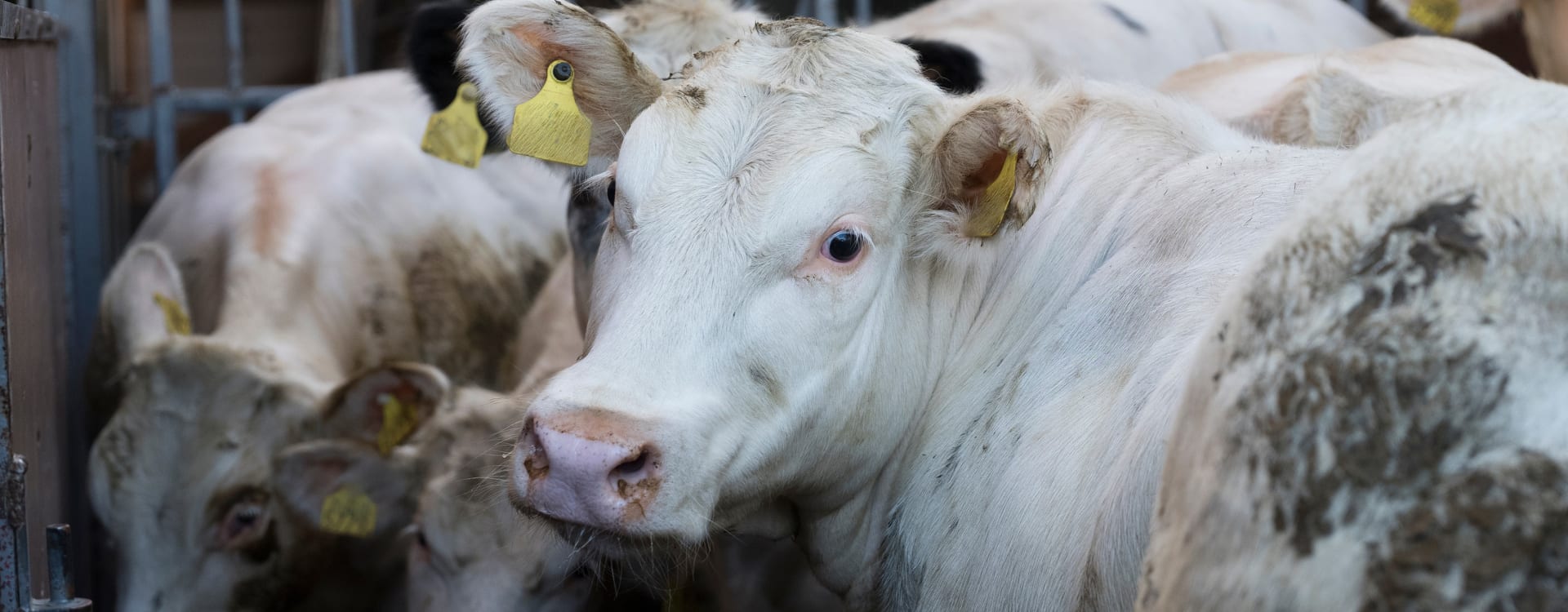
Every year, millions of animals are transported within and from the EU under conditions that cause immense suffering in the form of stress, fear, exhaustion, hunger, thirst, injury, and death. These transports can last for weeks or even months and take place in extreme heat. The current regulations are more than 20 years old and outdated.
It has now been nearly three years since the European Commission presented its proposal for a new regulation on the protection of animals during transport. The proposal included some improvements but needs to be strengthened in several areas, according to Project 1882.
Proposals called for by Project 1882
- Regular review of the legislation
A strong review clause requiring the Commission to regularly assess the Regulation against the latest scientific evidence and propose amendments where necessary. - Moving away from live animal transport
A time bound Commission roadmap and action plan to facilitate the transition away from long journey live animal transport towards transport of meat and genetic material. - Journey times
Significantly shorter transports, with species and category specific limits. A maximum transport time of 8 hours, regardless of whether the transport is for slaughter or for another purpose. The permitted transport time should be a maximum of 4 hours for birds and rabbits, as well as for so-called “end-of-life” animals. These are animals transported to slaughter after they are no longer considered profitable in factory farms, such as hens, sows, and cows. Transport time at sea must also be counted as transport time. - Unweaned, pregnant and vulnerable animals
More far-reaching rules for particularly vulnerable animals, such as young, unweaned animals, pregnant animals, and so-called end-of-life animals. - Stocking densities
Species and category specific maximum densities based on the latest science, taking account of animal size, age, vulnerability, journey duration and environmental conditions. - Temperature and humidity
Species specific temperature and humidity ranges based on EFSA recommendations, with conditions monitored throughout the journey, including inside trucks and containers.
Crucial negotiations
Negotiations on the EU’s animal transport legislation are ongoing in both the Council of Ministers and the European Parliament.
Read the full letter here.
Put an end to cruel animal transport!
Project 1882 is working to end cruel live animal transport. Help us by signing an open letter to members of the European Parliament.